
Understanding the expiration date of castor oil is crucial for its effectiveness and safety.
With various factors influencing its shelf life, knowing when to replace your bottle becomes essential.
From storage conditions to signs of spoilage, there are key indicators to watch out for.



Properly disposing of expired castor oil is also a responsible practice.
Stay tuned to uncover the nuances of castor oil expiry, and discover the best practices to ensure your supply remains potent and beneficial.
Key Takeaways
- Proper storage and handling impact Castor Oil's expiration date.
- Expiry may lead to reduced potency and potential skin issues.
- Dispose of expired oil safely to avoid adverse effects.
- Regularly check expiration dates for efficacy and safety.
Importance of Expiration Date
The expiration date of castor oil is a crucial indicator of its effectiveness and safety for use. Product safety is paramount when it comes to consumer awareness regarding the usage of castor oil. An expired product may not deliver the intended results due to a breakdown of its active components, potentially rendering it ineffective or even harmful. Manufacturers determine expiration dates through rigorous testing to ensure that the product maintains its efficacy and remains safe for consumer use within a specified period.
Consumer awareness plays a vital role in understanding the importance of adhering to expiration dates. Using castor oil beyond its expiration date can lead to skin irritations, reduced effectiveness, or other adverse reactions. It is essential for consumers to check the expiration date before using castor oil and to discard any expired products promptly. By prioritizing product safety and staying informed about expiration dates, consumers can maximize the benefits and minimize the risks associated with using castor oil.
Factors Affecting Shelf Life
Understanding various factors that influence the shelf life of castor oil is essential for consumers looking to maximize its efficacy and safety.
One critical factor is the environmental impact on the oil. Exposure to factors like heat, light, and air can accelerate the degradation process of castor oil, shortening its shelf life.
To prolong the shelf life of castor oil, proper storage is crucial. It is recommended to store castor oil in a cool, dark place away from direct sunlight and heat sources. Additionally, ensuring the bottle is tightly sealed can prevent air from getting inside and causing the oil to spoil faster.
Proper disposal methods are also important to consider when dealing with expired castor oil. It is recommended to dispose of expired castor oil properly according to local regulations to minimize environmental impact.
Signs of Castor Oil Spoilage
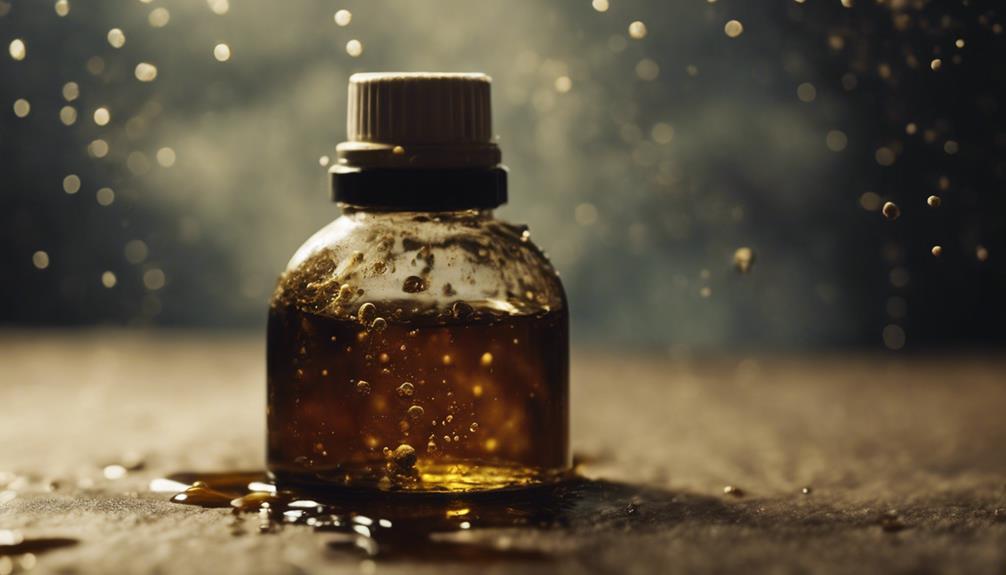
Factors affecting the shelf life of castor oil are important to consider, and one key aspect to watch for is the presence of specific signs that indicate spoilage. When assessing the quality of castor oil, it is crucial to pay attention to storage conditions. Castor oil should be stored in a cool, dark place away from direct sunlight and heat sources. Exposure to light, heat, and air can accelerate the oxidation process, leading to rancidity.
One of the most noticeable signs of castor oil spoilage is changes in color. Fresh castor oil typically has a pale yellow or colorless appearance. If the oil starts to darken or becomes cloudy, this could indicate that it has gone bad. Additionally, an off smell, such as a rancid or unpleasant odor, is another indication that the oil is no longer suitable for use. It is important to discard any castor oil that shows these signs of spoilage to avoid any adverse effects on the skin or hair when used.
Storage Tips to Extend Lifespan
To maximize the shelf life of castor oil, what are the essential storage tips that should be followed diligently? Proper handling and storage are crucial to preserving the quality of castor oil. Firstly, ensure that the oil is stored in a cool, dry place away from direct sunlight and sources of heat. Fluctuations in temperature and exposure to light can degrade the oil faster.
Additionally, it is important to seal the container tightly after each use to prevent oxidation. When handling the oil, make sure to use clean utensils to avoid introducing contaminants that could spoil the oil.
Container types also play a significant role in maintaining the freshness of castor oil. Opt for dark glass bottles or containers made of opaque materials to shield the oil from light exposure. Clear containers should be avoided as they do not offer sufficient protection against UV rays.
Furthermore, choose containers that can be sealed securely to prevent air from entering and causing oxidation. By following these storage tips diligently, you can extend the lifespan of your castor oil and ensure its efficacy when used.
Proper Disposal Methods
When it comes to the proper disposal of expired castor oil, it is crucial to consider the environmental impact of various disposal methods.
Some key points to focus on include how to safely dispose of unused castor oil, understanding the implications of improper disposal on the environment, and exploring community recycling programs that can provide sustainable solutions.
Disposing Unused Castor Oil
Properly disposing of unused castor oil is essential to prevent environmental harm and ensure safety. When disposing of castor oil, consider these methods:
- Take it to a Hazardous Waste Facility: Many communities have designated facilities that accept hazardous materials for safe disposal.
- Mix with an Absorbent Material: Mixing the castor oil with materials like cat litter can solidify it, making it easier and safer to dispose of.
- Do Not Pour Down the Drain: Avoid pouring castor oil down sinks or drains as it can contaminate water sources.
These methods help protect the environment and prevent any negative impact on ecosystems. Proper disposal is crucial for maintaining a clean and safe environment.
Environmental Impact Considerations
Considering the potential harm to the environment posed by improper disposal methods, it is imperative to employ effective strategies for handling expired castor oil. Sustainability practices should be prioritized when determining disposal methods for castor oil that has exceeded its shelf life.
Environmental impact assessments should guide decisions on whether to recycle, reuse, or dispose of expired castor oil. Proper disposal methods include finding facilities that specialize in handling hazardous waste or contacting local authorities for guidance on safe disposal practices.
It is crucial to avoid pouring castor oil down drains or disposing of it in regular trash, as this can lead to contamination of water sources and soil. By following responsible disposal practices, individuals can minimize the environmental impact of expired castor oil.
Community Recycling Programs
Community recycling programs offer an effective solution for the proper disposal of expired castor oil, ensuring minimal environmental impact. Participating in these programs not only helps in keeping the environment clean but also promotes sustainability practices. Here are some benefits of utilizing community recycling programs for disposing of castor oil:
- Reduction of landfill waste: Recycling castor oil prevents it from ending up in landfills, reducing environmental pollution.
- Resource conservation: By recycling castor oil, valuable resources are conserved, contributing to a more sustainable future.
- Energy savings: Recycling castor oil requires less energy than producing new products from raw materials, aiding in energy conservation efforts.
FAQs About Castor Oil Expiry
Understanding the implications of Castor Oil expiry is crucial for maintaining its effectiveness and safety. Castor Oil, like any other product, has a shelf life, beyond which it may not provide the same benefits and could potentially pose risks to the user. Here are some frequently asked questions regarding Castor Oil expiry:
| FAQs About Castor Oil Expiry | |||
|---|---|---|---|
| Question | Answer | ||
| Does Castor Oil expire? | Yes, Castor Oil does expire. | ||
| What is the shelf stability of Castor Oil? | Castor Oil typically has a shelf life of 2-5 years. | ||
| How does expired Castor Oil affect product safety? | Expired Castor Oil may lose its potency and could lead to skin irritation or other adverse effects. | ||
| Can expired Castor Oil be used for any purpose? | It is not recommended to use expired Castor Oil as it may not deliver the desired results and could potentially be harmful. |
It is important to check the expiry date of Castor Oil before use to ensure its efficacy and safety.
Conclusion and Recap
Given the importance of understanding the implications of Castor Oil expiry, it is now pertinent to provide a comprehensive conclusion and recap of the key points discussed regarding its shelf life and potential risks.
- Recap of Key Points:
- Castor oil typically has a long shelf life of 2-5 years if stored properly.
- Signs of expired castor oil include a rancid smell, change in color, or separation of the oil.
- Using expired castor oil can lead to skin irritation or reduced effectiveness in treatments.
Frequently Asked Questions
Can Expired Castor Oil Still Be Used for Hair or Skin Care Purposes?
Expired castor oil may still be used for hair or skin care, but efficacy diminishes. Store in a cool, dark place to extend shelf life. Degradation process includes loss of potency and potential rancidity. Consider fresh alternatives for best results.
Is It Safe to Consume Expired Castor Oil for Its Health Benefits?
While castor oil is generally safe for consumption, using expired castor oil for health benefits can pose potential risks. Consuming expired oil may lead to gastrointestinal discomfort or reduced effectiveness, highlighting the importance of checking expiration dates for safety and efficacy.
Will Expired Castor Oil Lose Its Effectiveness in Promoting Hair Growth or Treating Skin Conditions?
Castor oil's effectiveness in promoting hair growth or treating skin conditions may diminish after expiration. The shelf life impacts its quality, potentially altering its properties. Using expired castor oil could compromise its benefits due to decreased potency.
Can Expired Castor Oil Be Repurposed for Other Household Uses?
When considering repurposing options for expired castor oil, it can be utilized as a natural lubricant for squeaky hinges, a conditioner for leather goods, or a polish for wooden furniture. Proper storage tips include keeping it in a cool, dark place.
Does the Expiration Date on Castor Oil Products Indicate a Sudden Loss of Potency, or Is It a Gradual Decline in Quality?
The expiration date on castor oil products generally signifies a gradual decline in quality rather than an abrupt loss of potency. Factors such as storage conditions, exposure to light, and temperature fluctuations can impact the chemical composition and shelf life, leading to quality degradation over time.
Conclusion
In conclusion, knowing when castor oil expires is crucial for maintaining its effectiveness and safety. By understanding the factors that influence its shelf life and recognizing signs of spoilage, you can ensure that your castor oil remains potent and usable.
Proper storage techniques and disposal methods are essential for extending its lifespan. Just as a well-tended garden thrives with care and attention, so too can your castor oil product flourish when handled with diligence and foresight.